
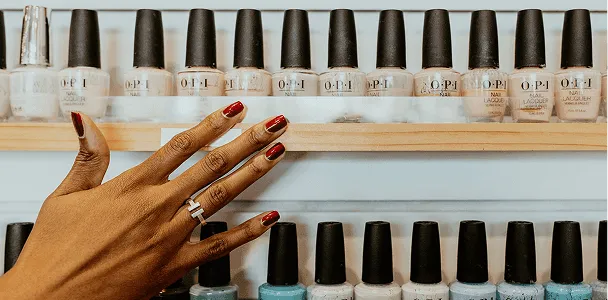
If your nails feel thinner, more flexible, or unexpectedly sensitive in the days after a manicure, the cause is almost always something that happened during the appointment itself — not a sign that your natural nails are simply weak. Three factors show up again and again: shaping that goes further than it should, a removal process that gets rushed, and product or technique that doesn't suit your nails. None of these are inevitable, and knowing which one you're dealing with is the first step toward nails that stay strong from one appointment to the next.
Over-filing: when shaping goes further than it should
A nail file is meant to shape the free edge and smooth the surface lightly — it isn't meant to remove meaningful thickness from the nail plate itself. When shaping is done too aggressively, especially with a coarse-grit file or an e-file used carelessly over the nail surface rather than just the cuticle area, the nail plate can thin out layer by layer without you noticing until after polish comes off. Nails that come out of a service feeling flexible, bendy, or almost paper-thin have often been over-filed rather than damaged by the polish itself.
Gentle shaping uses a fine-grit file with light, one-direction strokes, and any e-file work stays focused on cuticle cleanup rather than buffing down the nail plate. If your nails regularly feel weaker right after your appointment rather than gradually over the two weeks that follow, filing technique is worth asking your technician about directly.
Rushed removal: the most common cause of post-appointment sensitivity
Gel, dip, and hard gel all need real time to soften before they come off — several minutes of soaking or wrapping, not a quick scrape. When product is pried at, peeled off, or the soak is cut short, it takes layers of natural nail along with it, leaving nails feeling thin, rough, or tender for days afterward. This is the single biggest driver of nail sensitivity after gel-family services specifically, and we cover it in much more depth — including how a proper soak-off should actually feel — in our guide to gel and natural-nail health.
Product quality and ingredient sensitivity
Lower-quality formulas can also play a role — thin gels that need extra coats to build durability, harsh solvent-based removers, or polish applied without proper prep can all stress the nail and surrounding skin. Separately, some people develop a sensitivity to a specific bonding ingredient common in many gel and dip systems, which shows up as redness, itching, or tenderness around the cuticle rather than thinning of the nail plate itself. This distinction matters: if what you're noticing is irritation around the skin rather than a thin or bendy nail, an ingredient sensitivity is the more likely explanation than filing or removal technique. Our non-toxic salon guide walks through the specific ingredients worth asking your salon about.
What gentle technique actually looks like
The good news is that all three causes are preventable with an unhurried, attentive technician. At our Scottsdale salon, every manicure follows the same standard regardless of finish:
- Fine-grit files and light, controlled pressure — never aggressive buffing across the nail plate
- Full soak time for every gel, dip, and hard gel removal, with a technician checking and re-soaking rather than prying
- Sanitized, sealed tools for every guest, opened fresh at the start of your service
- A technician who pauses and asks if something feels off, rather than pushing through the service on a fixed clock
It's a fair question to ask any salon before you book, too — how they handle filing and removal specifically, not just what polish they use. Cuticle work deserves the same care: our Russian manicure uses a precise, dry cuticle technique rather than clipping or soaking, which is gentler on the surrounding skin and leaves a cleaner edge for polish to hold onto.
Normal sensitivity versus something worth addressing
A little tenderness for a day or two after cuticle work or a longer soak-off is common and typically resolves on its own — nails and the skin around them are used to being left alone, and any hands-on service involves some adjustment. What's worth flagging to your technician is sensitivity, thinness, or peeling that lasts more than a few days, gets worse rather than better, or shows up the same way after every visit. A pattern like that usually points to technique rather than a one-off, and it's reasonable to mention it before your next appointment so it can be adjusted rather than repeated.
Giving your nails a reset between visits
Even with careful technique, natural nails benefit from the occasional lighter week — a simple polish or a scheduled gap between gel sets gives the nail plate a chance to recover its normal thickness and flexibility. Keeping cuticles and nail edges moisturized with a dedicated oil in the meantime supports that recovery, too; we go into the daily habits that help most in our guide to making a manicure last.
Nails breaking or feeling sensitive after a salon visit isn't something you have to accept as the cost of pretty polish. It almost always traces back to filing, removal, or product — all of which come down to how much care and time a technician puts into your service. That's the standard we hold every appointment to at Pamprd Soul: unhurried technique from the first file stroke to the last bit of soak-off. Come feel the difference a gentle hand makes.
Frequently Asked Questions
Why do my nails feel thin after a gel manicure?
Thin or flexible-feeling nails after a gel manicure almost always point to the removal step rather than the gel itself. Gel needs several minutes of soaking to fully release, and prying or scraping it off early takes layers of the natural nail along with the product. A proper soak-off should leave your nails feeling close to how they felt before the gel went on.
Is it normal for nails to feel sensitive after a manicure?
Mild tenderness for a day or two after cuticle work or a longer soak-off is common and usually resolves on its own. Sensitivity that lasts more than a few days, worsens, or repeats after every visit is worth mentioning to your technician, since it typically points to filing or removal technique rather than something to simply wait out.
How can I prevent my nails from breaking after a salon visit?
Ask how your salon handles filing and removal before you book: a gentle technician uses a fine-grit file with light pressure and allows full soak time for gel, dip, or hard gel removal rather than prying at it. Giving your nails an occasional lighter week between services and keeping cuticles moisturized also helps them stay strong.